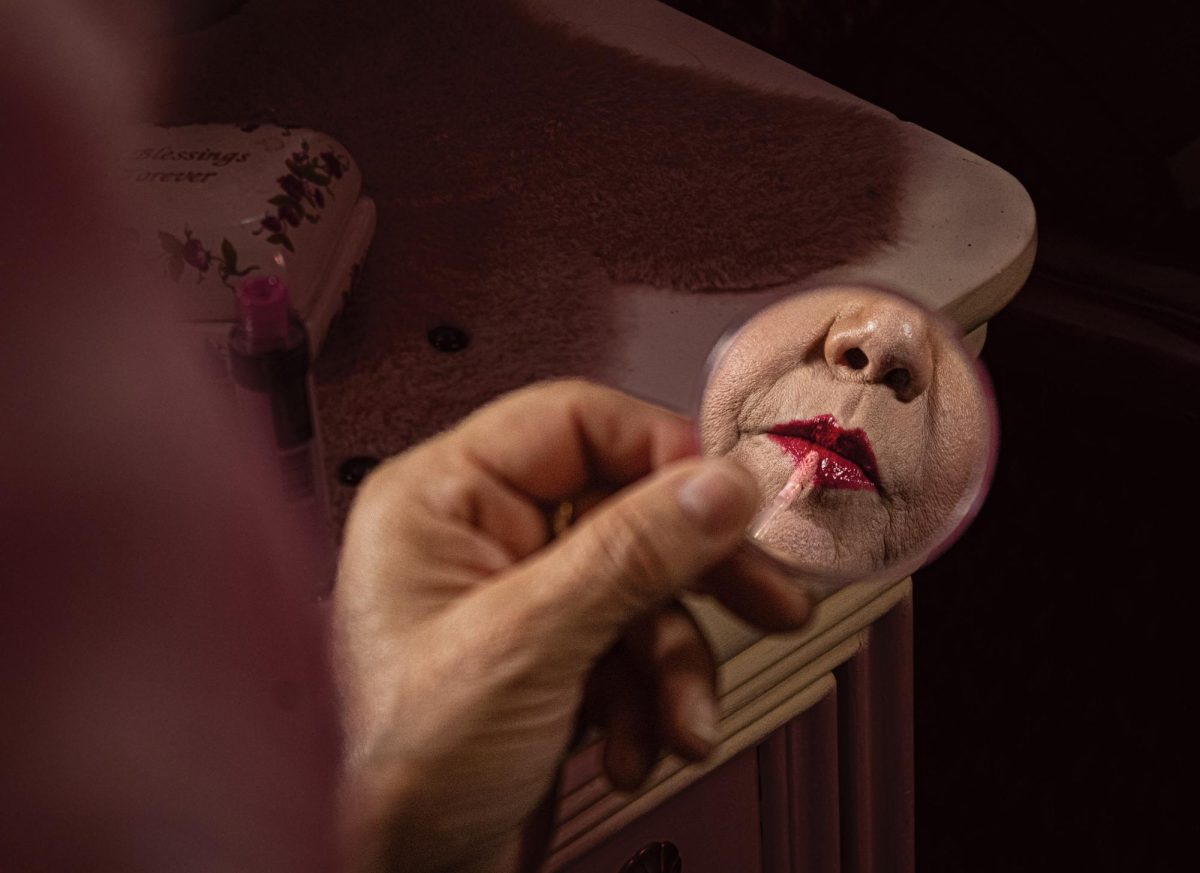
From working in food service to servicing the youth as a student worker, gossip remains the current that keeps us both sane and spiraling in every job we’ve had. Talk about putting your mouth where your money is. In this co-written article, we hear exclusive insights into the world of work gossip:

Food Service Edition
Jesie Garcia
Let’s paint the picture: You’re in the middle of taking an order, three customers just flagged you down for some straws; the drive-through line is wrapped around a block. Behind you, two of your coworkers with completely different work ethics are on the edge of a screaming match.
After all this, you still get your orders out and food served right on time. Then, when it finally slows down, you know your work friends will be taking a gossip break in the storage room.
Despite the type of food establishment, after a long day, the high stress and fast paced environment can wear down on the spirit. However, the way you and your work friends will gossip about that potential-screaming match will save the day.
Steve Barraza, 21, has been working as a barista for four years now.
“I think the gossip mostly surrounds people’s work ethics,” Barraza said. There’s a specific frustration looming in his workplace where one person can work efficiently on all tasks, yet someone else just cannot get it.
Barraza says work gossip tends to divide coworkers when it comes to certain matters, whether it’s a petty crime or severe accusations made.
“It’s almost like people will create a sense of identity, almost like a child of divorce. You either go with your mom or dad. At the end of the day, it’s two very opposite ideas,” Barraza said. “It’s also the identity of those who are around you. It’s like we all agree that one person sucks so we’re all friends based off this idea.”
Unlike corporate or student jobs, while there’s teamwork, food service often involves feeling a coworker’s breath on your neck, as you must work significantly physically close to each other.
There is something about everyone dealing with sassy customers who believe your entire life’s purpose is to serve people. With sweat beading down everyone’s forehead after a rush and that one coworker who slowed everyone down; this creates a different kind of closeness when gossiping.
However, because of that closeness, serious allegations against coworkers make trying to be cordial far more difficult.
Barraza says because there are so many personalities in service work, when allegations are made it’s difficult to dance around entertaining the idea and running the risk of creating much bigger problems.
“I feel like those kinds of people end up trying to mold themselves to be viewed more positively and try to be more friendly,” Barraza said. “But even when they try to change their perception, I still know what they’ve done… It’s an elephant in the room.”
At the end of the day, shared work gossip in the service industry means it creates deeper ties and brings people together despite the messiness of it all.
“Right now, we have an iffy coworker, and it brought the whole store together,” Barraza said. “I feel like it tore down any boundaries we had with each other and brought us together.”
Service work is not for the weak. It comes with aching feet, a need for and lots of tolerance, but it also comes with the joys of spilling some gossip (when the gossip is light hearted enough to be spilled).
On-campus Student Employment Edition
Victoria Adler
Maybe the only difference between the food industry and student jobs is the uniform. One of us wears the apron, the other a name tag. Either way, someone’s always serving someone else. There’s emotional labor in both worlds, shared exhaustion, and a quiet understanding that we’re all somewhere near the bottom. We learn to smile, nod, and say “of course” even when we’re drowning in a shift that feels like it’ll never end — at least in the food industry, you get tips. We just get “professional development.”
Yet, there’s a special kind of gossip that brews in student jobs, the kind that smells faintly of burnt coffee, broken printers, and fluorescent lighting that hums louder than our will to live. It starts small, a whispered “you didn’t hear this from me” in the break room and suddenly everyone’s got the same secret in different versions. It’s not just gossip; it’s part of the job.
Working as a resident assistant (RA) taught me that gossip is practically part of the job description, or maybe even the job itself. You live where you work and work where you live. Now imagine this: You’re answering emails while a freshman panics over the washing machine, a parent calls because their kid didn’t text back in a day, and someone just set off the fire alarm with burnt rice. Meanwhile, your supervisors are asking you to “smile more.”
There’s no off switch. You’re the hall therapist, the emotional support adult, the unofficial event planner, and the person who calls maintenance when someone throws up in the staircase. All before noon. Between midnight and 3 a.m., though? That’s when the real work starts.
By morning, the news travels faster than a group chat notification. Someone cried in the stairwell? Heard about it. Someone got written up? Not phased by it. Someone “accidentally” set off the fire alarm at 2 a.m.? Everyone knows, and somehow it’s already on the socials. The walls have ears, and apparently, they gossip too.
But here’s the thing: gossip in student jobs isn’t always mean. Sometimes it’s the only way we survive the chaos. When your entire staff is made up of sleep-deprived students pretending to be responsible adults, gossip becomes a lifeline. It’s how you figure out who actually answers emails, which supervisor to avoid, and who secretly hates staff meetings as much as you do.
It’s not just talk.
It’s therapy — unpaid, unlicensed, and wildly unproductive.
We like to think we’re different from the baristas and cashiers, but we’re not –we’re all just performing customer service in different fonts.
The only difference is that our “customers” are students who think the washing machine is out to get them, and residents demanding a new room because their roommate cooks eggs “too aggressively” in the morning—true story.
There’s irony in the way we all act like we’re climbing some great professional ladder, when really, we’re just passing the same one around and pretending it’s not broken. And somehow, we still answer, “fine?” to the same fake concern asked by the current coordinator: “are you okay?” As if she asked with a thousand condescending question marks at the end.
Because it is easier than admitting we’re one incident report away from evaporating into thin air.
Some nights, though, the gossip turns soft. You laugh about the absurdity, like the coworker who decided to flirt with that resident; the one everyone either wants to date or warn others about. Then there’s the staff group chat that feels like a low-budget reality show no one auditioned for. It’s messy, ridiculous, and sometimes even sweet.
On-campus jobs are a crash course in how wild the work world really can be. Each position — from on-call roles to office gigs to creative projects — teaches you to juggle chaos, problem-solve, and connection with people in ways no classroom ever could. They’re exhausting, unpredictable, and messy — and that’s exactly why they’re the best preparation for what comes next.
By the end of it, I realized gossip in student jobs isn’t a flaw in the system, it is the system. It’s how we vent, connect, and stay sane while pretending to be adults with “transferable skills.” It’s not about the stories we tell, but how we survive them.
There’s a strange comfort in knowing we’re all just trying to make sense of this halfway place — not quite students, not quite professionals.
Because when you work where you live, either literally or figuratively, at a local cafe or on campus, professionalism isn’t about policies. It’s about patience, timing, and knowing exactly which messages in the group chat can wait until your soul is mostly intact.